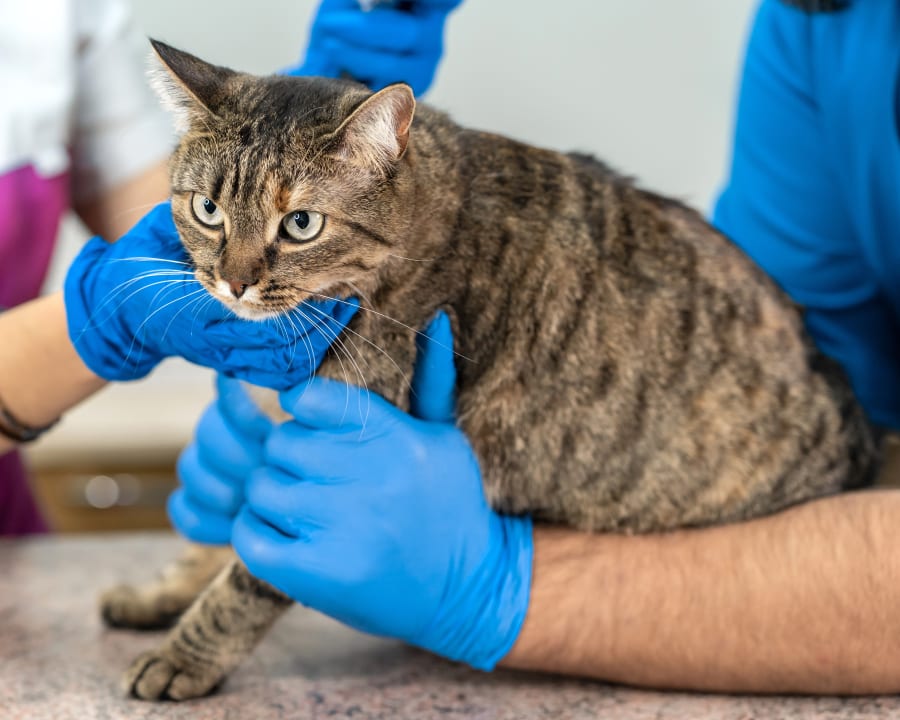
Treating Pet Skin Conditions
There are a variety of skin conditions that can affect dogs and cats, but some are more common than others. These include allergies, bacterial or fungal infections, chronic scratching, skin parasites and hair loss.
With years of training and experience in veterinary dermatology, our Springfield specialist can differentiate between the various conditions associated with pet skin conditions. This allows for a more accurate diagnosis and the most effective treatment.
Our New Patient Form
Before your appointment with Dr. Bruce Hansen, please take some time to fill out our New Patient Form below.
Our Board-Certified Dermatologist
A board-certified veterinary dermatologist has completed additional training after veterinary school in dermatology. Meet Dr. Bruce Hansen, our dermatologist!
Why Would My Pet Need to See a Veterinary Dermatologist?
Skin disease, although rarely life-threatening, is extremely frustrating to treat. In most cases your veterinarian is capable of providing safe and effective therapy for your pet’s skin disorder.
However, in some cases, in an effort to provide the latest and most effective treatment modalities, your veterinarian may choose to offer a referral to a veterinary dermatologist.
Your veterinarian’s decision to offer referral to a specialist indicates that they want your pet to have the best possible care available.
Veterinary Dermatology FAQs
Our dermatology specialist will work with you to determine the cause of your pet's discomfort and will recommend treatment based on their needs.
The following are some of the most commonly asked questions by our clients:
-
What is a Veterinary Dermatologist and why are they board certified?
A veterinary dermatologist is a veterinarian who, after completing four years of veterinary school, has completed an internship and residency program in dermatology and allergy. In order to achieve board certification, the individual must then qualify and successfully pass a rigorous examination covering all aspects of veterinary dermatology and allergy. At the present time there are approximately one hundred veterinarians who have achieved board certification by the American College of Veterinary Dermatology. Board certification is the highest level of specialization available today in clinical veterinary medicine.
-
After our visit, what role will our veterinarian play?
After each visit, a referral letter will be sent to your veterinarian detailing all clinical findings, laboratory test results, diagnoses and treatment recommendations. Close communication between Dr. Hansen and your local veterinarian is critical in maintaining the highest level of care for your pet. Dr. Hansen is a veterinary dermatologist and only treats skin disease (including ears and nails) and allergies. Therefore, your veterinarian will continue to provide comprehensive veterinary care.
-
How do I make an appointment?
Please call (703) 440-9206 for an appointment or go to dermatologyandallergyvet.com and click on “Request an appointment”.
-
What should I bring to the appointment?
Please bring:
- A list of all medications with strengths and dosages or pill vials with labels.
- Any medical records or chest x-rays that have not been sent electronically by your veterinarian.
- Your pet.
-
How do I prepare my pet for its appointment?
If possible do not bathe your pet for 7 days prior to the examination so that we can see the full extent of the skin disease. Please do not feed your pet for 12 hours prior to the examination. Antihistamines (benadryl, hydroxyzine, chlorpheniramine, etc.) should be discontinued for 7 days prior to examination. Unless otherwise instructed please continue all other medications which have been prescribed by your veterinarian. Please let us know if your pet is receiving corticosteroids, and the severity of your pet’s itching.
-
What can I expect during the initial office visit?
The initial office visit will take 45 to 60 minutes. Dr. Hansen will review your pet’s complete history and perform a thorough dermatological examination. After examining your pet, the Doctor will explain the nature of your pet’s problem, discuss diagnostic tests that are recommended and outline the recommended therapy.
-
How are allergy tests conducted?
Both intradermal skin testing and serum (blood) allergy testing are offered. Although serum allergy testing can give meaningful results, intradermal skin testing is considered to be more accurate and is the preferred method of allergy testing in dogs. However, several medications can interfere with intradermal skin testing and therefore, the patient should not have any antihistamines (amitriptyline, hydroxyzine or atarax, benadryl, chlorpheniramine) or tranquilizers (acepromazine) for at least 7 days prior to intradermal allergy testing. The effects of corticosteroids (prednisolone) on allergy testing are somewhat controversial, but it is generally accepted that steroids should be withdrawn (if possible) for 2 weeks prior to intradermal skin testing. If the patient’s level of itch makes it impossible to go 2 weeks without corticosteroids, please contact Dr. Hansen’s staff for specific instructions.
-
What costs are associated with dermatological care?
Specialized tests and therapies, as in human medicine, may be more expensive than in general practice, but may be less costly in the long run. If you have any questions about costs, please do not hesitate to ask our receptionist. Fees are payable when the services are rendered and payment can be made with cash, check or by Master Card, Visa, Discover or American Express. We do not accept Care Credit.
-
Tell us about your staff
Our staff realizes that dermatological conditions are chronic and extremely frustrating for pet owners. We try to do everything possible to keep your pet comfortable. We are never too busy to give you the attention and respect you deserve. Our technicians are trained to handle most routine dermatological questions, and if they are unsure of an answer, Dr. Hansen is consulted. However, if you wish to speak directly to Dr. Hansen, please indicate this to the receptionist and Dr. Hansen will return your call.